How and When to Prune Rhododendrons for a Shapely Shrub and a Riot of Spring Color
Is your rhody getting as tall as your house? Crowding out its neighbors? Maybe it just needs a gentle trim. However you want to prune your rhododendron, we've got you covered.



Rhododendrons are beautiful, eye-catching shrubs that can reach towering heights if you let them. They fill out the landscape with their big glossy leaves and, for a few magical weeks in spring, they explode into a mass of color that heralds the season of new life to come.
That "if you let them" is key, though. Rhododendrons are vigorous growers, and it's not uncommon to see one nudging its head up in front of a second story window. Once overgrown, they can also get leggy or a bit thin at the base. There's nothing technically wrong with a gigantic rhododendron, and in someone else's yard they're a wonder to behold. If you want to keep yours more under control, though, you'll need to whip out the pruning shears.
Pruning a rhododendron isn't that intimidating. As long as you follow a few simple rules, you can maintain the health and beauty of this gorgeous shrub for decades. In this guide we'll cover both how and when to prune rhododendrons. Let's dive into this essential part of rhododendron care.

When to Prune Rhododendron Bushes
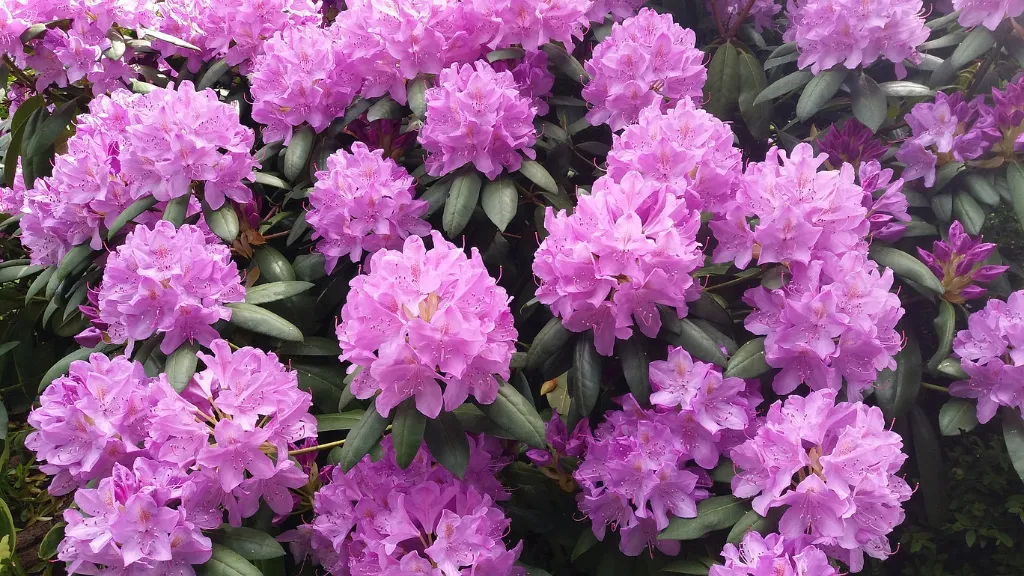
The best time to prune a rhododendron is spring, immediately after the flowers have faded. Rhododendron flower buds set in summer and overwinter on the plant. Prune too late, and you run the risk of accidentally cutting off all of next year's potential flowers! If you prune in spring, just after blooming, you'll be safe.
Spring is also the time that lush new growth naturally starts, giving it plenty of time to mature and harden off before temperatures drop in the fall. Prune too late and you'll kickstart another round of growth that won't have time to mature and could get damaged by the winter cold.
Why to Prune Rhododendrons
There are two reasons to prune a rhododendron: encouraging flowers and shaping the shrub. While shaping can be done on an as-needed basis, you should encourage flowers every year. This is done by deadheading, or removing the spent blooms.
Deadheading

Rhododendrons bloom all at once, most varieties in the spring. After the surge of color, the flowers fade to brown and wither. It is possible to get a self-cleaning variety that drops spent flowers on its own.
Most rhododendrons, however, need to be manually deadheaded, and that's not a chore you'll want to skip. Pruning off spent rhododendron flowers actually encourages more flowers the following spring. Leave them in place and you'll probably have a less spectacular show next year.
To deadhead a rhododendron, use a sharp pair of shears and snip off the entire flower cluster. If you don't want to shape your rhododendron this year, just leave it at that!
Shaping

The other reason to prune a rhododendron is for shaping. This may be because the shrub has gotten too tall or has started crowding out its neighbors. It could also be because the plant is getting leggy or thin and is in need of a reset, which calls for more drastic rejuvenation pruning.
How to Prune Rhododendrons
Immediately after flowers fade, it's time to start cutting.
For general shaping, trim no more than 15 to 20 inches (38-51 cm) off the strongest branches. Cut back the plant to expose the inner branches. Follow the branch down to the last whorl of leaves you want to keep and cut just above those leaves, about 1/4 inch (6 mm) above the topmost leaf in this cluster.
Large, overgrown rhododendrons can be cut 12 to 15 inches (31-38 cm) from the ground when necessary. Rhododendrons often have three or more main branches rising from the crown of the plant. Each of these primary branches should be cut at a different height to produce a more natural-looking shrub.
Cut about 1/2 to 3/4 of an inch (1-2 cm) just above a latent bud. Pruning above a cluster of two or three buds is even better. Sometimes more severe pruning may be necessary, requiring cutting to about 6 inches (15 cm) or so from the ground.
Their adventitious buds at the base of the plant will send up new shoots, but keep in mind that flowering usually will not occur for up to two or three years after this heavy pruning.
Pruning Essentials


